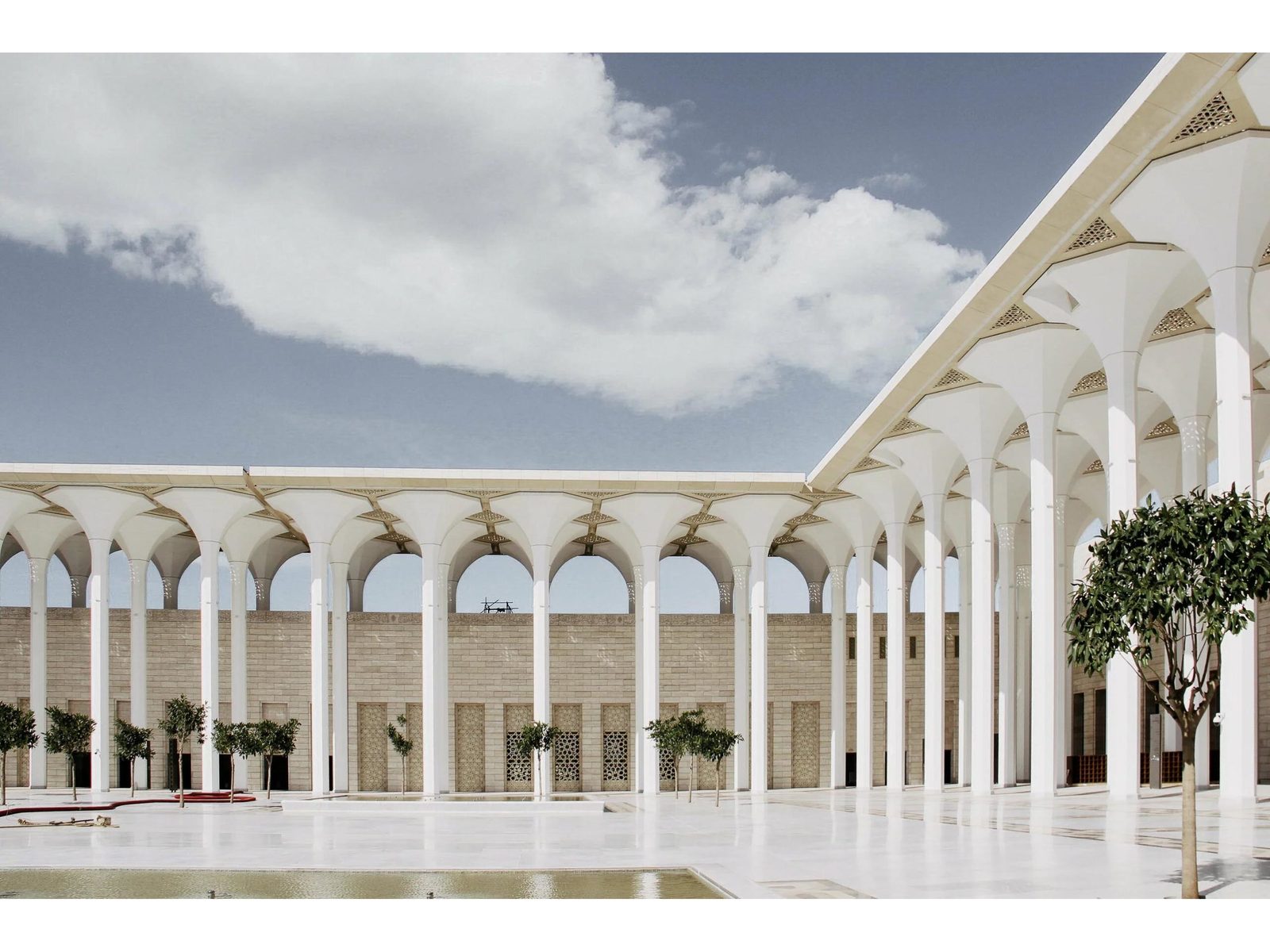
GRC & GFRC Facade Panels and Furniture
Glass-fibre reinforced concrete for architectural facades and outdoor furniture — facade panels, curved cladding, decorative screens, column covers and architectural features, together with benches, seating and custom site elements. Thin-section, lightweight, mould-formed components in flat, curved and double-curved geometry, with custom dimensions, colours and textures.
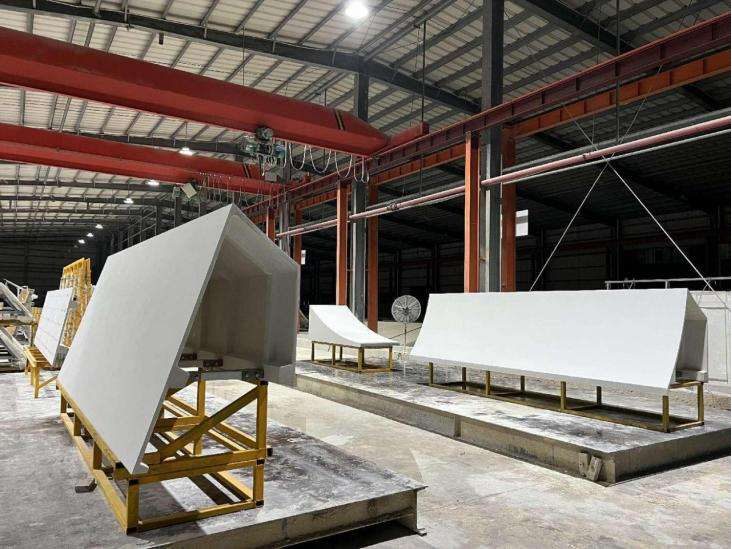
Glassfibre reinforced concrete panels are cast as thin skins of 12–25 mm using alkali-resistant glass fibre at 4–5 % by mass in a cement-rich matrix. Typical dry density is 1.8–2.1 g/cm³, with a modulus of rupture of 15–30 MPa and a limit of proportionality of 7–12 MPa measured at 28 days. The composite is non-combustible Class A and resists impact, freeze-thaw cycling and surface erosion, allowing slender sections that would crack in conventional reinforced concrete.
Panels are produced on a steel backing frame with galvanized 200×360×12 mm embedded plates, L160×16 angle connectors, pre-set M12 anchor bolts and 40×40×4 mm square hollow section stud framing, giving an installed weight of about 110 kg/m² at 2.1–2.4 g/cm³ composite density. Joints are detailed at 8 mm and sealed with elastomeric gaskets over compressible backing rod. Series production above 12,000 pieces is documented for repetitive facade and street furniture programmes.
- BS EN 1170 — Test methods for glass-fibre reinforced cement, covering bending and tensile behaviour.
- EN 1169 — Precast concrete products — factory production control rules for glass-fibre reinforced cement.
- ASTM C947 — Test method for flexural properties of thin-section glass-fibre reinforced concrete.
- ASTM C1116 — Standard specification for fibre-reinforced concrete, including glass fibre systems.
- ANSI/PCI 128-24 — Specification for glass-fibre reinforced concrete panels (2nd edition, 2024), covering materials, design, fabrication and erection of GFRC panels.
- PCI MNL-130 — Manual for quality control for plants and production of glass-fibre reinforced concrete products, the reference standard for GFRC batching, spraying, curing and testing.
- PCI MNL-117 — Manual for quality control for plants and production of architectural precast concrete products, applied to facade panel casting and anchorage.
- PCI MNL-135 — Tolerance manual for precast and prestressed concrete construction, governing panel, frame and erection tolerances.
- EN 13501-1 — Reaction-to-fire classification for non-combustible cladding and furniture shells.
- EN 1992-1-1 — Eurocode 2 design rules for concrete members and their anchorage.
Outdoor furniture meets project-specific requirements for loading, stability, anchorage, durability and user safety, adopting the GFRC material and quality control provisions as applicable.
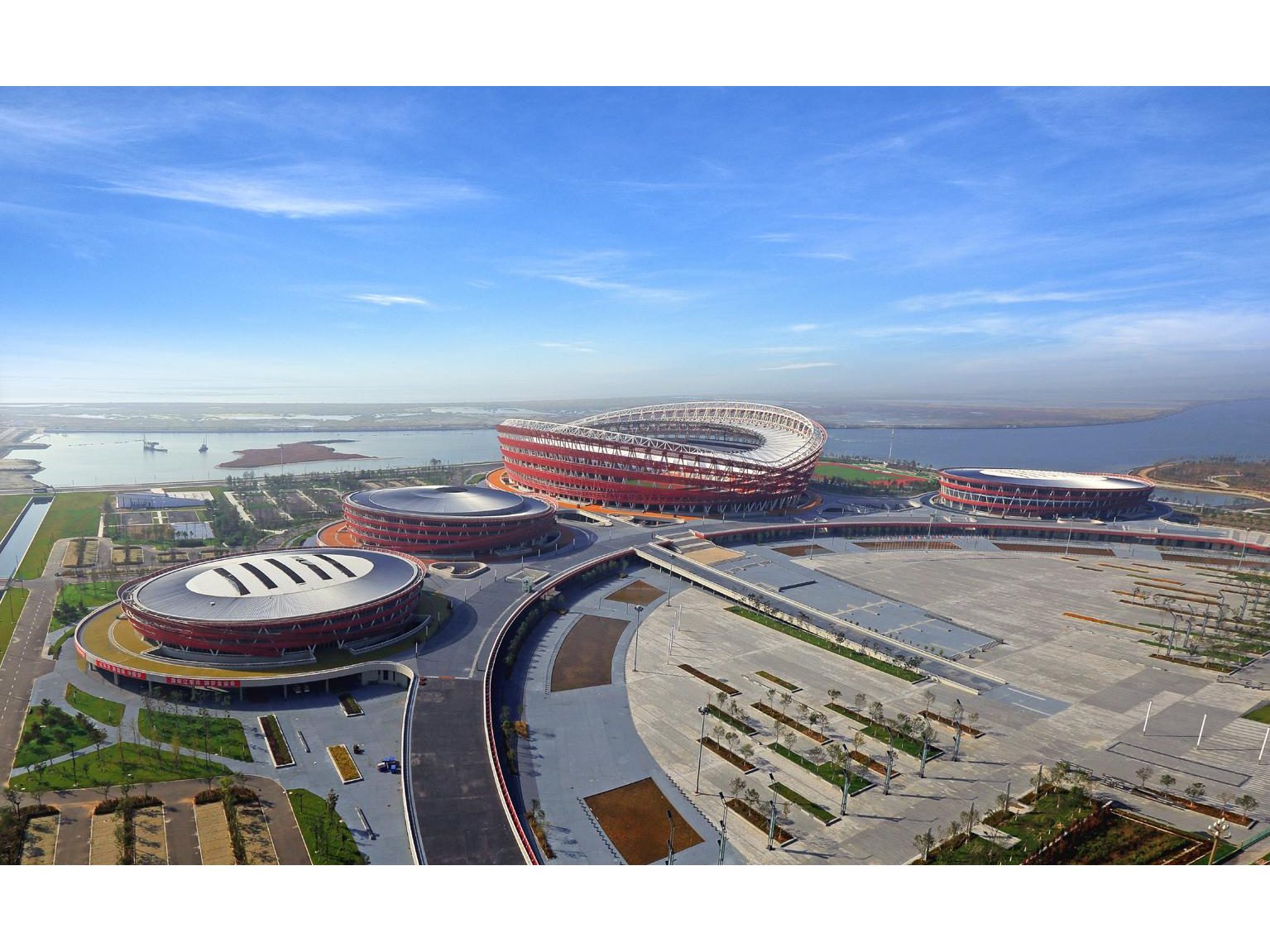
- Commercial & Hospitality — rainscreen cladding panels on office and hotel facades.
- Residential — decorative screens, cornices and balcony balustrades.
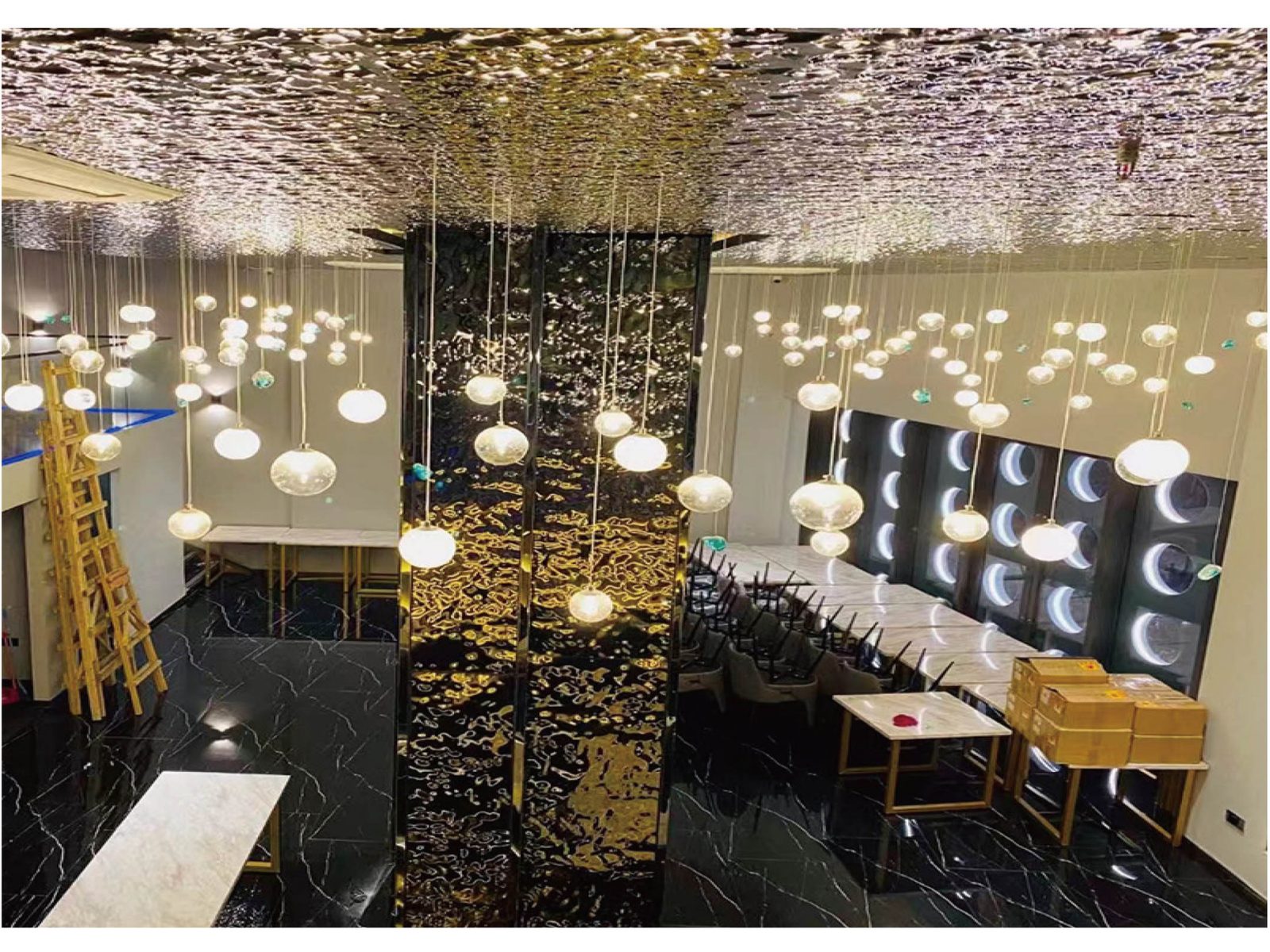
- Urban Furniture — bench shells, planters and bollard covers in the public realm.
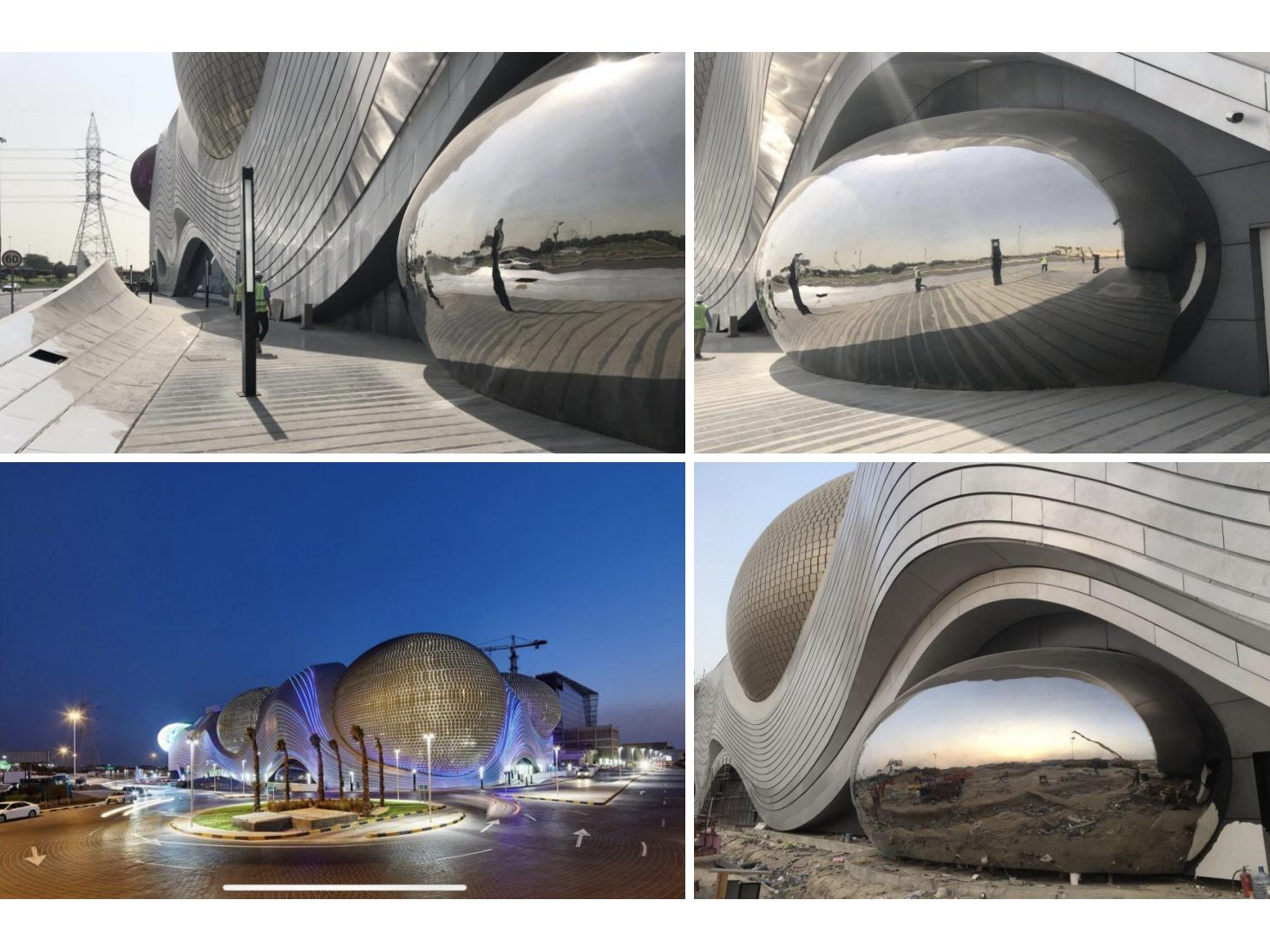
- Cultural & Public — feature fins and sculptural wall panels in museums.
- Retail & Mixed-Use — shopfront surrounds and column casings.
- Landscape & Public Realm — paving edge units and site furniture in plazas.
- Transport & Infrastructure — cladding and acoustic screens on transit buildings.
- ISO 9001 factory production control certificate
- Type-test reports for modulus of rupture and limit of proportionality at 28 days
- EN 13501-1 reaction-to-fire classification report
- EN 10204 3.1 material certificates for galvanized steel anchors and stud framing
- Alkali-resistance and fibre content declaration for the glass fibre reinforcement
- Dimensional inspection and tolerance records for each production batch
- Mould design, prototype panels and finish samples for approval before production release.
- Engineered backing frames and connection design coordinated with the structural frame.
- Export packing with face protection, FOB / CFR / CIF to Gulf ports.
Multiple project references with internationally recognised architectural designers and design firms. Supplied to projects across the Gulf, North and Sub-Saharan Africa, South-East Asia and Australia. Middle East supplies are subject to project-specific approval by the owner, engineer or consultant; PROTEKTA prepares and supports the submittal package for that approval.
GRC & GFRC Facade Panels and Furniture — Buyer Questions
What can GRC be used for?
Architectural facade panels, curved and double-curved cladding, decorative screens, column covers and architectural features, together with outdoor benches, seating and custom landscape elements. Supplied for projects across the GCC — Saudi Arabia, UAE, Qatar, Kuwait, Oman and Bahrain — and to Iraq, Algeria, Morocco, Nigeria, Ethiopia, Tanzania, Malaysia, Thailand, Singapore, Indonesia, Brunei and Australia, with compliance documentation prepared for consultant, contractor and authority submittal.
Which standards and certifications apply?
Facade products are supplied to ANSI/PCI 128-24 with quality control to PCI MNL-130, and tested to ASTM C947, C1185, C1229 and C1230. European projects can be supplied to EN 1169 and EN 1170. Also specified and procured as GRC Panel, GFRC Panel and Glass Fibre Reinforced Concrete; full specification ranges, material grades and datasheets are issued for tender, submittal and procurement use.
What finishes are available?
Smooth, natural-stone-effect, wood-grain, terrazzo and exposed-aggregate surfaces, with custom colours and textures and finish samples approved before production release. OEM, private-label and bespoke manufacture is supported for contractors, distributors and EPC packages.
Is anchorage design included?
Yes. Facade panels can incorporate engineered backing frames and connections, and furniture items are supplied with load and stability calculations for the intended use. Export packing, third-party inspection and consolidated shipment to Gulf ports/global ports are arranged with the order.