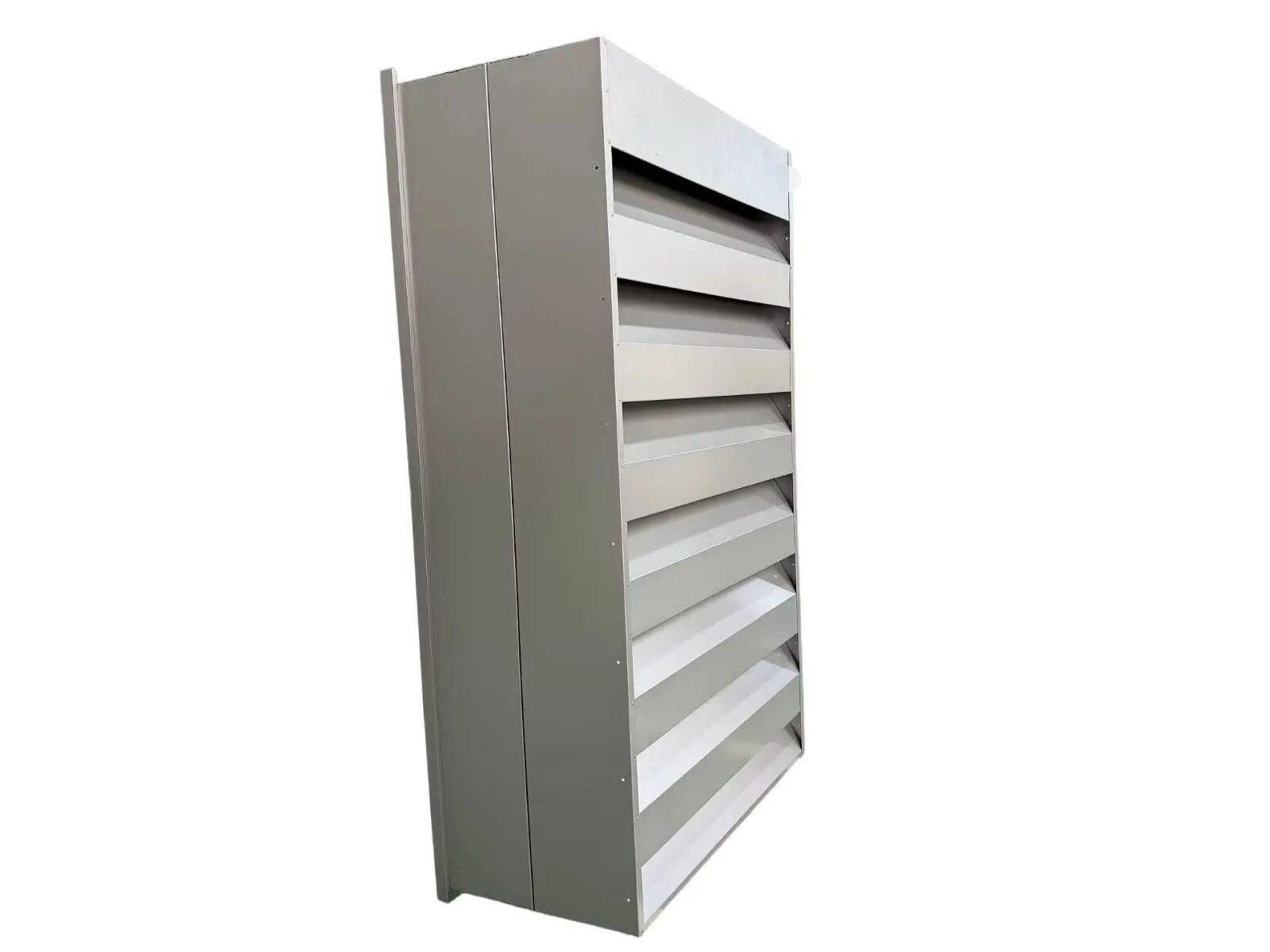
Acoustic & Fire Louvers
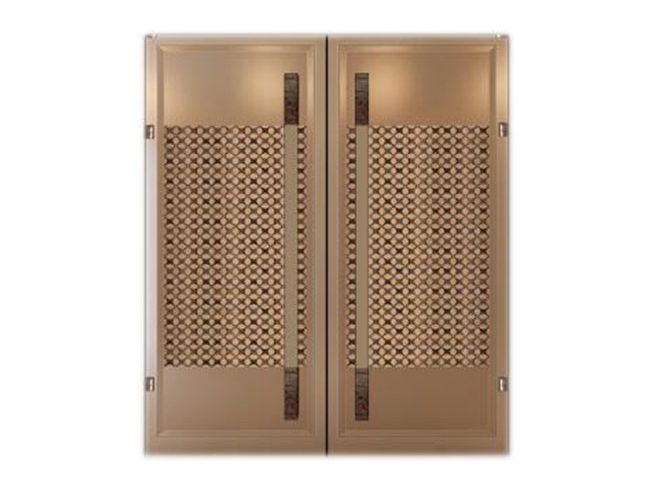
Architectural and plant louvers covering four duties — rainproof, decorative, sand-trap and filter conventional louvers, acoustic louvers for plant and equipment room noise control, and fire-rated louvers that close on a fusible link or fire alarm interlock. Supplied with acoustic calculations, pressure loss data and structural wind load calculations for approval and coordination.
Acoustic ventilation louvers are supplied in 100 mm, 150 mm, 300 mm and 600 mm frame depths, with blade pitches of 100-300 mm and free-area ratios from 22% to 45%. Perforated, absorptively filled blades give weighted sound reduction indices of Rw 9-26 dB to BS EN ISO 10140-2, equivalent to STC 10-24 under ASTM E90, with octave-band insertion loss measured from 63 Hz to 8 kHz. Single-bank and double-bank chevron arrangements serve plant-room intake and exhaust, sustaining 2-5 m/s face velocity at 12-60 Pa within ASHRAE 90.1 pressure-drop budgets.
Fire-rated louvers are tested to EN 1366-2 and classified EI 60, EI 90 and EI 120 to EN 13501-3, with cold-smoke sealed EIS 120 assemblies released by a 72 °C fusible link. Listings give 1½ h and 3 h ratings to UL 555, UL 555S leakage Class I (8 cfm/ft²) or Class II (20 cfm/ft²) at 4 in. w.g., 2000 fpm operational velocity and 250 °F to 350 °F temperature ratings. Weather louvers reach EN 13030 Class A rain defence at 13 m/s and 75 mm/h.
- EN 12101-2 — Product standard for smoke and heat exhaust ventilators, covering aerodynamic free area, reliability classes and high-temperature operation of smoke-control louvre assemblies.
- EN 1366-2 / EN 13501-3 — Fire resistance test method and classification for fire-resisting louvres and fire dampers, supporting EI 60, EI 90 and EI 120 integrity, insulation and smoke-sealed ratings.
- BS 476-20/22 — UK fire resistance test method for determining the integrity and insulation performance of louvre and closure assemblies in rated separating elements.
- UL 555 / UL 555S — Fire damper and smoke damper standards defining 1-1/2 h and 3 h ratings, dynamic closure and leakage Class I to III measured at 4 in. w.g.
- AMCA 500-L / AMCA 540 / AMCA 550 — Louvre air performance, water penetration and sound test methods, extended by large-missile impact and high-velocity wind-driven rain tests for severe-duty installations.
- EN 13030 / EN 13501-1 — Simulated rain and airflow testing classifying louvre rain defence from Class A to D and airflow resistance from Class 1 to 4, with reaction-to-fire declared as A1 or A2-s1, d0.
Acoustic ratings are stated for the tested model and blade depth. Pressure loss and free area are calculated per opening so the ventilation duty can be verified against the fan selection.
- Data Centers & Mission Critical — generator room combustion air intake and radiator discharge openings; ups battery room supply and extract openings with fire-rated separation; cooling tower fresh air intake and acoustic plant room exhaust walls.
- Power Generation & Utilities — diesel genset enclosures, turbine halls and substation transformer rooms.
- Oil & Gas — compressor shelters, pump houses and offshore module ventilation walls.
- Industrial & Manufacturing — boiler house combustion air openings and process fan exhaust walls.
- Commercial & Institutional Buildings — basement car park ventilation and rooftop plant room screens.
- Healthcare & Education — emergency generator exhaust walls and smoke shaft intake terminals.
- Transport & Infrastructure — tunnel ventilation buildings, metro plant rooms and airport apron substations.
- Third-party fire resistance test report and classification certificate to EN 1366-2 / EN 13501-3 (EI 60 to EI 120).
- Smoke and heat exhaust ventilator performance certificate to EN 12101-2, including reliability and thermal cycling.
- Acoustic performance test report to BS EN ISO 10140-2 or ASTM E90 with full octave-band transmission loss data.
- Certified air performance and water penetration ratings under AMCA 500-L, with AMCA 540 and AMCA 550 where required.
- Reaction-to-fire classification declaration to EN 13501-1 and material conformance statement for acoustic infill.
- Declaration of performance with CE or UKCA marking, plus ISO 9001 quality management certification.
- Acoustic calculations, ventilation pressure loss and structural calculations prepared per opening.
- Combination packages — acoustic louvers with conventional rainproof, sand-trap and filter units on one elevation.
- Export packing, FOB / CFR / CIF to Gulf ports/global ports, with installation drawings and supervision available.
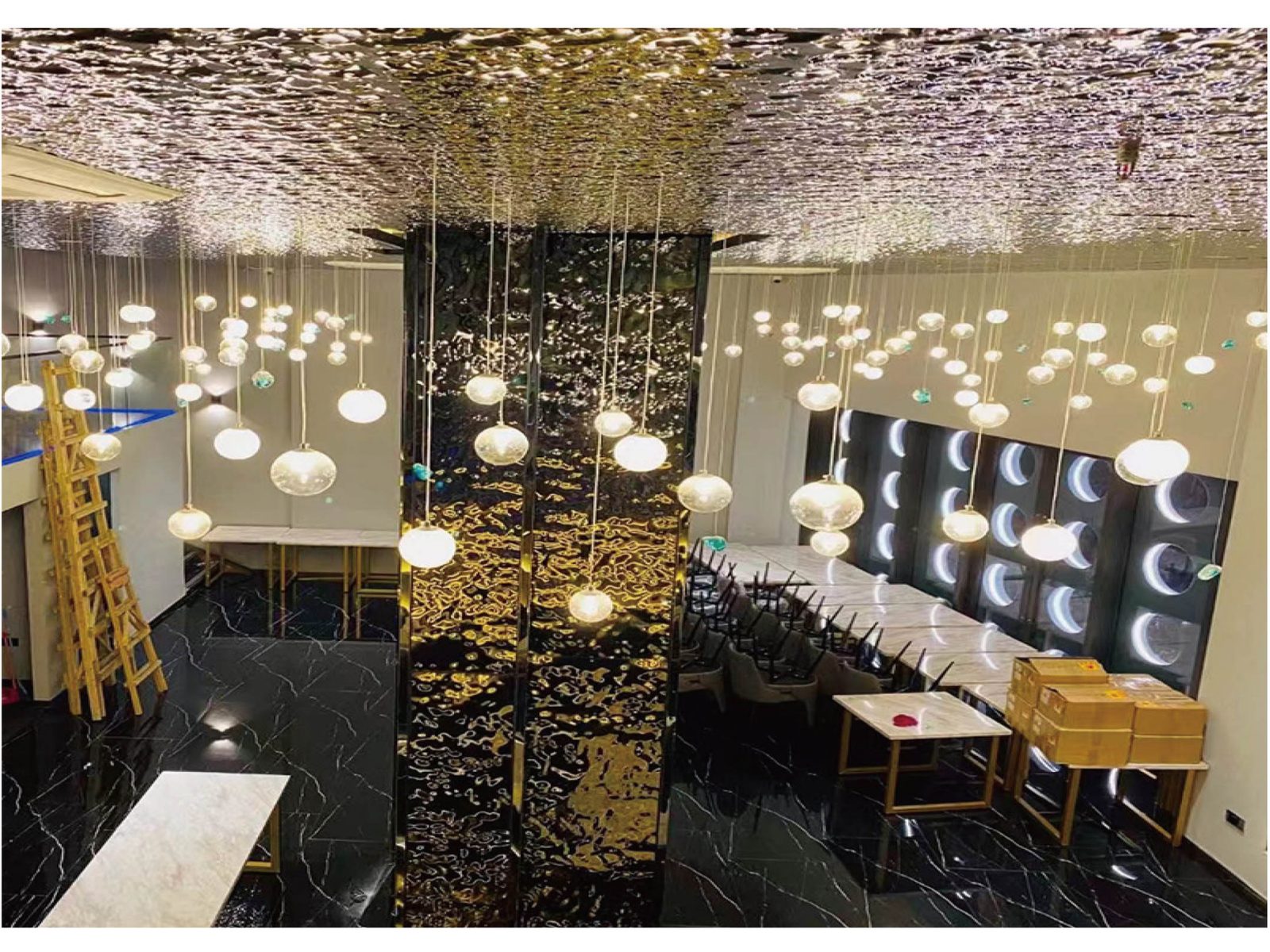
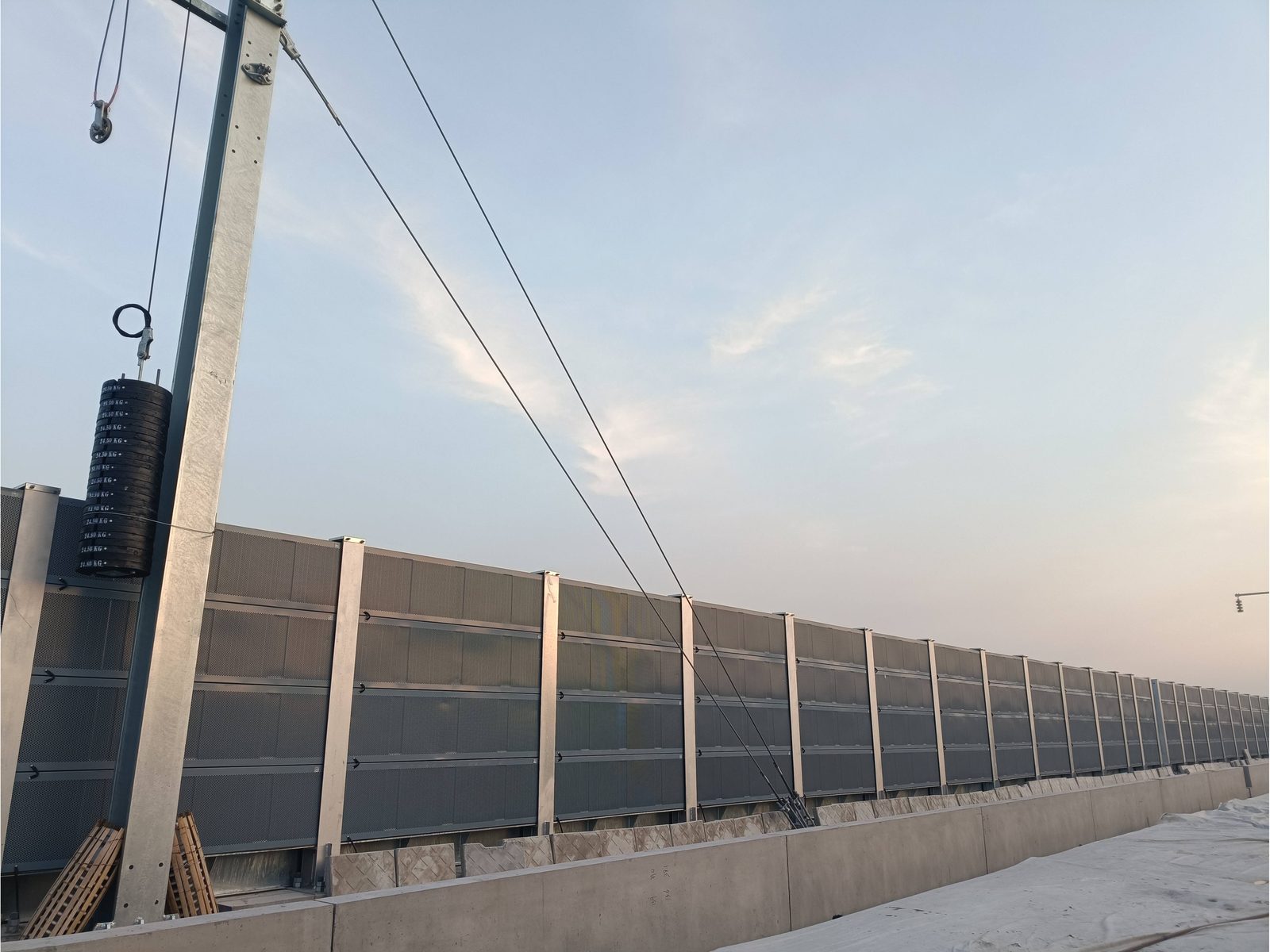
Acoustic louver systems have been applied to data centre and equipment room noise control and to hotel and cooling tower screening, with large Middle East and African projects commonly delivered as a combination of acoustic and conventional louvers. Supplied to projects across the Gulf, North and Sub-Saharan Africa, South-East Asia and Australia. Middle East supplies are subject to project-specific approval by the owner, engineer or consultant; PROTEKTA prepares and supports the submittal package for that approval.
Acoustic & Fire Louvers — Buyer Questions
What acoustic performance can be achieved?
Acoustic louvers are tested to ASTM E90-09 with typical sound transmission class ratings from STC 10 to STC 26, depending on blade depth and model. Ratings are stated for the tested configuration and supplied with the calculation package. Supplied for projects across the GCC — Saudi Arabia, UAE, Qatar, Kuwait, Oman and Bahrain — and to Iraq, Algeria, Morocco, Nigeria, Ethiopia, Tanzania, Malaysia, Thailand, Singapore, Indonesia, Brunei and Australia, with compliance documentation prepared for consultant, contractor and authority submittal.
What fire rating do fire louvers carry?
Fire-rated louvers carry FRL90, approximately 90 minutes, closing on a fusible link that triggers at about 74 °C. Electrical interlocking with the fire alarm system is available where the design requires it. Also specified and procured as Acoustic Louver, Sand Trap Louver and Rainproof Louver; full specification ranges, material grades and datasheets are issued for tender, submittal and procurement use.
Are calculations provided for approval?
Yes. Acoustic calculations, ventilation pressure loss, mechanical and structural wind load calculations, and detailed node drawings are prepared per opening so the ventilation duty can be verified against the fan selection. OEM, private-label and bespoke manufacture is supported for contractors, distributors and EPC packages.
Can louvers be supplied for data centre plant rooms?
Yes. Acoustic louvers are supplied for generator halls, UPS and plant room ventilation, and for cooling tower acoustic enclosures, where noise limits at the site boundary govern the selection. Export packing, third-party inspection and consolidated shipment to Gulf ports/global ports are arranged with the order.