
Building Joint Sealants
Building joint sealants for weatherproof and waterproof sealing at door and window perimeters, curtain wall joints, structural connection joints, roof and flashing construction joints, expansion joints and wall-to-floor junctions. Supplied as silicone, polyurethane, polysulfide, acrylic and hybrid systems with matching backing rods, bond breakers and primers so the sealant geometry is controlled and three-sided adhesion is avoided.
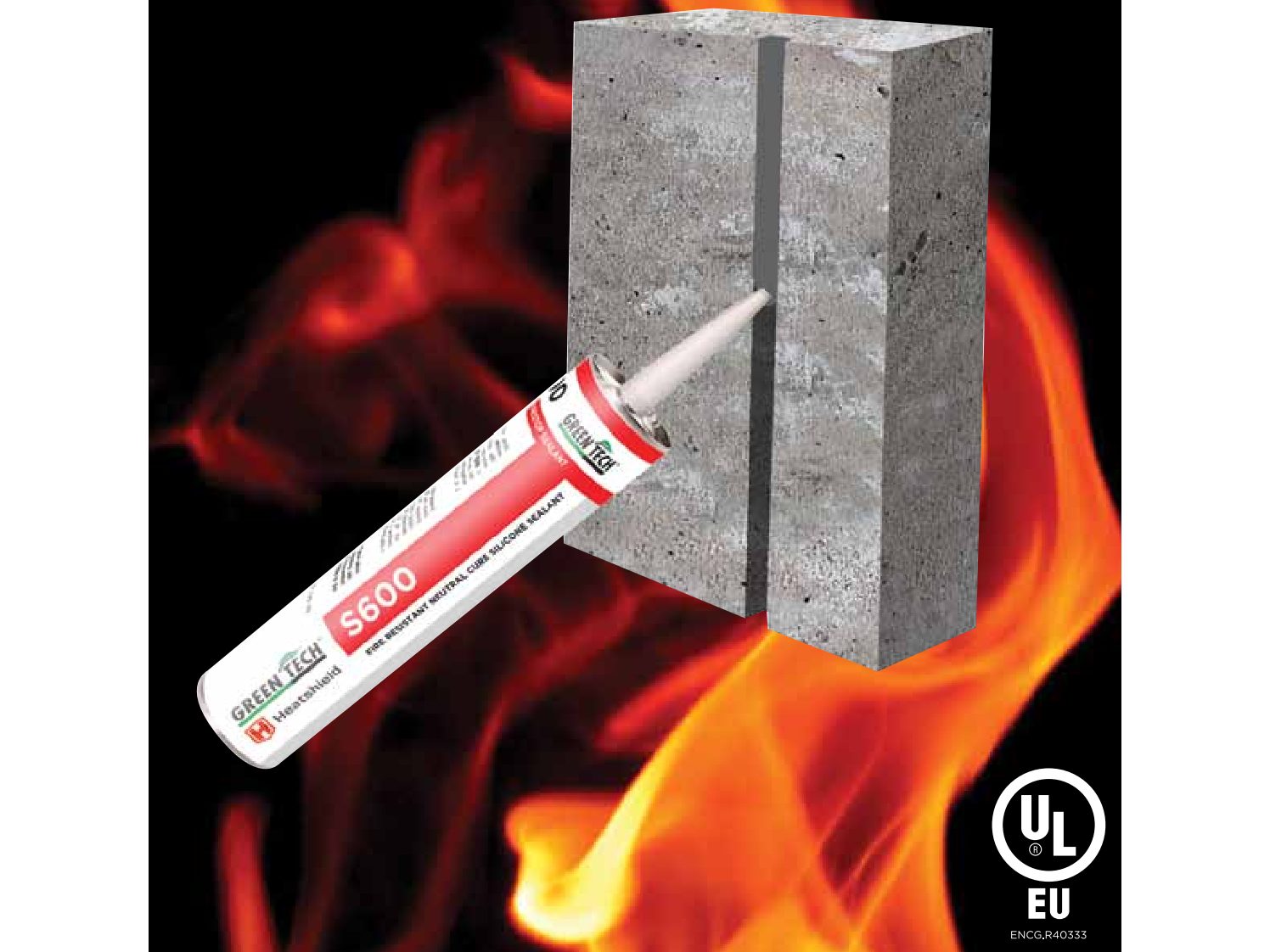
Manufactured range covers one- and two-part silicone sealants, polyurethane sealants, moisture-curing hybrid polymers, water-based acrylics, two-part polysulphide grades in pouring and gun-applied consistencies, and bitumen-modified polyurethane. Polysulphide grades accommodate about ±25% movement. Fire-resistant grades remain rated up to 4 hours, and an intumescent acrylic forms an inorganic crust under fire exposure.
Applications include precast concrete and brickwork perimeter joints, curtain wall and structural glazing, insulating glass units, ACP cladding, floor and wall joints, expansion and isolation joints, penetrations and duct sealing. Supporting items include closed-cell polyethylene backing rod in 6 to 50 mm diameters and primers. Potable-water, marine and mould-resistant sanitary grades are supplied for kitchens, bathrooms and health facilities.
- EN 1366-4 — fire resistance tests for linear joint seals.
- BS 476-20 / DIN 4102 — fire resistance and fire classification methods for sealant grades.
- ASTM E84 Class A — surface burning characteristics for fire-rated silicone and polyurethane grades.
- BS 6920 — suitability for contact with potable water.
- ISO 11600 / EN 15651-1 — classification and requirements for building and facade joint sealants.
- ASTM C920 / ISO 9046 — elastomeric joint sealants; adhesion and cohesion under movement.
Adhesion and compatibility testing is carried out on the actual project substrates before the sealant schedule is released, and movement capability is stated to ISO 11600 or ASTM C920 class.
- Facades & glazing — curtain wall, structural glazing, ACP cladding and insulating glass perimeter sealing.
- Below-grade & water retaining structures — polysulphide sealing of expansion joints in tunnels, underpasses, treatment and desalination plants.
- Floor & wall joints — concrete construction, expansion and isolation joints in parking and industrial slabs.
- Fire-rated joints & penetrations — sealing of fire walls, partition heads, cable and pipe penetrations.
- Wet areas & kitchens — mould-resistant sanitary silicone for counters, sinks and bathroom fixtures.
- Data centres — sealing of floor joints and cable penetrations in server halls and containment.
- Fire resistance classification up to 4 hours for fire-rated silicone and polyurethane foam grades.
- ASTM E84 Class A surface burning classification.
- BS 6920 approval for potable-water contact applications.
- IMO type approval for the marine grade where specified.
- Batch certificates and technical data sheets for each supplied grade.
- Sealant, primer, backing rod and bond breaker supplied as one system.
- Joint design support — width, depth and movement calculation per joint type.
- Export packing, FOB / CFR / CIF to Gulf ports/global ports, consolidated with waterproofing membranes.
Multiple project references with internationally recognised architectural designers and design firms. Supplied to projects across the Gulf, North and Sub-Saharan Africa, South-East Asia and Australia. Middle East supplies are subject to project-specific approval by the owner, engineer or consultant; PROTEKTA prepares and supports the submittal package for that approval.
Building Joint Sealants — Buyer Questions
Which sealant chemistries are supplied?
Silicone, polyurethane, polysulfide, acrylic and hybrid sealants, selected against the movement requirement and substrate — silicone for UV and glass contact, polyurethane for trafficable joints, polysulfide for immersed or fuel-exposed joints, and hybrids for general use. Supplied for projects across the GCC — Saudi Arabia, UAE, Qatar, Kuwait, Oman and Bahrain — and to Iraq, Algeria, Morocco, Nigeria, Ethiopia, Tanzania, Malaysia, Thailand, Singapore, Indonesia, Brunei and Australia, with compliance documentation prepared for consultant, contractor and authority submittal.
Which standards and certifications apply?
Sealants are classified to ISO 11600 or ASTM C920, with non-structural joint sealants assessed to EN 15651-1 to -5. Tensile and adhesion testing follows ISO 8339 and ISO 9046, and adhesion-in-peel testing ASTM C794. Also specified and procured as Silicone Sealant, Polyurethane Sealant and Expansion Joint Sealant; full specification ranges, material grades and datasheets are issued for tender, submittal and procurement use.
How is the joint designed?
Joint width is sized to the expected movement and the sealant class, with backing rods and bond breakers controlling depth so three-sided adhesion is avoided. Primers are specified for porous or difficult substrates. OEM, private-label and bespoke manufacture is supported for contractors, distributors and EPC packages.
Is adhesion testing carried out before supply?
Yes. Adhesion and compatibility testing is carried out on the actual project substrates before the sealant schedule is released, and movement capability is stated to the applicable class. Export packing, third-party inspection and consolidated shipment to Gulf ports/global ports are arranged with the order.