Non-Shrink, Epoxy & Injection Grouting
A grouting range covering four distinct duties — non-shrink cementitious grout for machinery baseplates, column bases, bearing plates and anchor bolts; high-strength epoxy grout for impact, abrasion and chemical resistance; fast-foaming polyurethane resins for temporary water stoppage and permanent flexible injection; and low-viscosity epoxy resin for structural crack bonding. Grade selection follows the load-bearing, waterproofing or structural repair requirement.
Cementitious range includes a non-shrink free-flow grout for machine and steel bearing plates, column bases and anchor bolts, and a shrinkage-compensated micro-concrete for pours from 10 mm to 250 mm. Documented 28-day values for the micro-concrete exceed 70 N/mm² compressive, 9 N/mm² flexural and 5 N/mm² tensile strength, with water penetration below 10 mm at 5 bar pressure. Material is self-compacting and can be placed under a head of pressure.
Structural repair mortar in the same range exceeds 50 N/mm² compressive, 7 N/mm² flexural and 20 N/mm² shear strength at 28 days, with bond strength above 1.5 N/mm². Epoxy resin grades cover non-slump bedding and chemical anchoring of bolts and replacement reinforcement, pile-head encapsulation, bridge bearing pads and crane-rail anchoring, and chemical-resistant lining and benching. Pot life is about 30 minutes; application temperature is 5 to 45 °C.
- ASTM C109 / C1107 — compressive strength of hydraulic cement mortars and packaged dry, hydraulic-cement grout.
- ASTM C580 / C882 — flexural strength and shear strength of epoxy and modified mortars.
- ASTM D4541 — pull-off adhesion strength of coatings and toppings.
- ASTM C939 / C940 — flow and expansion of grout for preplaced-aggregate concrete.
- BS EN 12390 — testing hardened concrete, used for water penetration under pressure.
Applicable standards for the epoxy and polyurethane grades are confirmed against the latest product-specific technical data sheet and test reports.
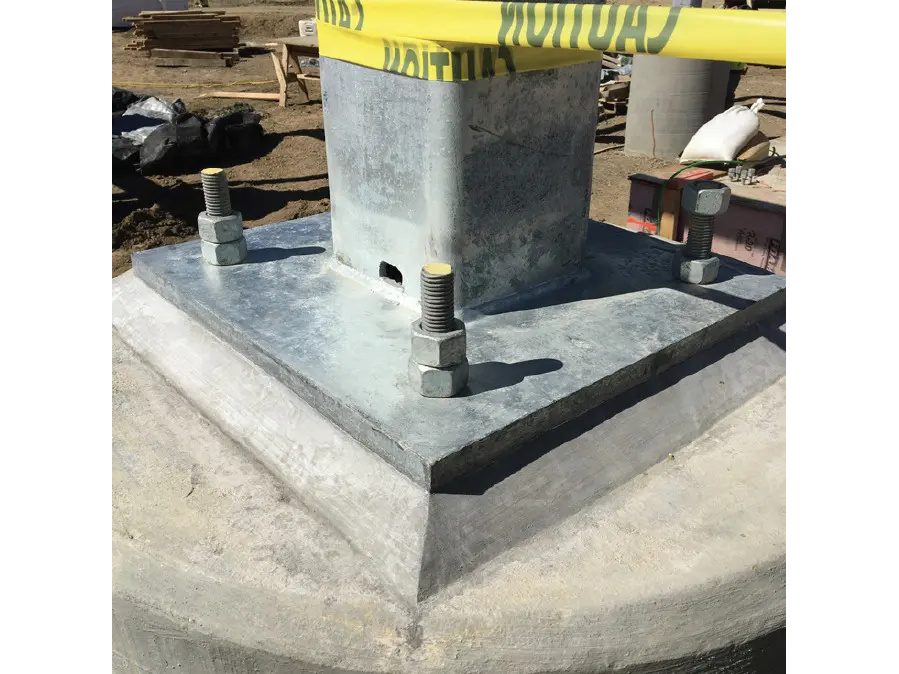
- Machine bases & anchor bolts — non-shrink free-flow grout ensuring full bearing contact under baseplates.
- Column bases & precast — grouting of precast, tilt-up and prestressed element connections.
- Pile head re-profiling & void filling — free-flowing micro-concrete for restricted-access and congested reinforcement areas.
- Structural concrete repair — high-strength repair mortar for beams, columns, slabs and marine structures.
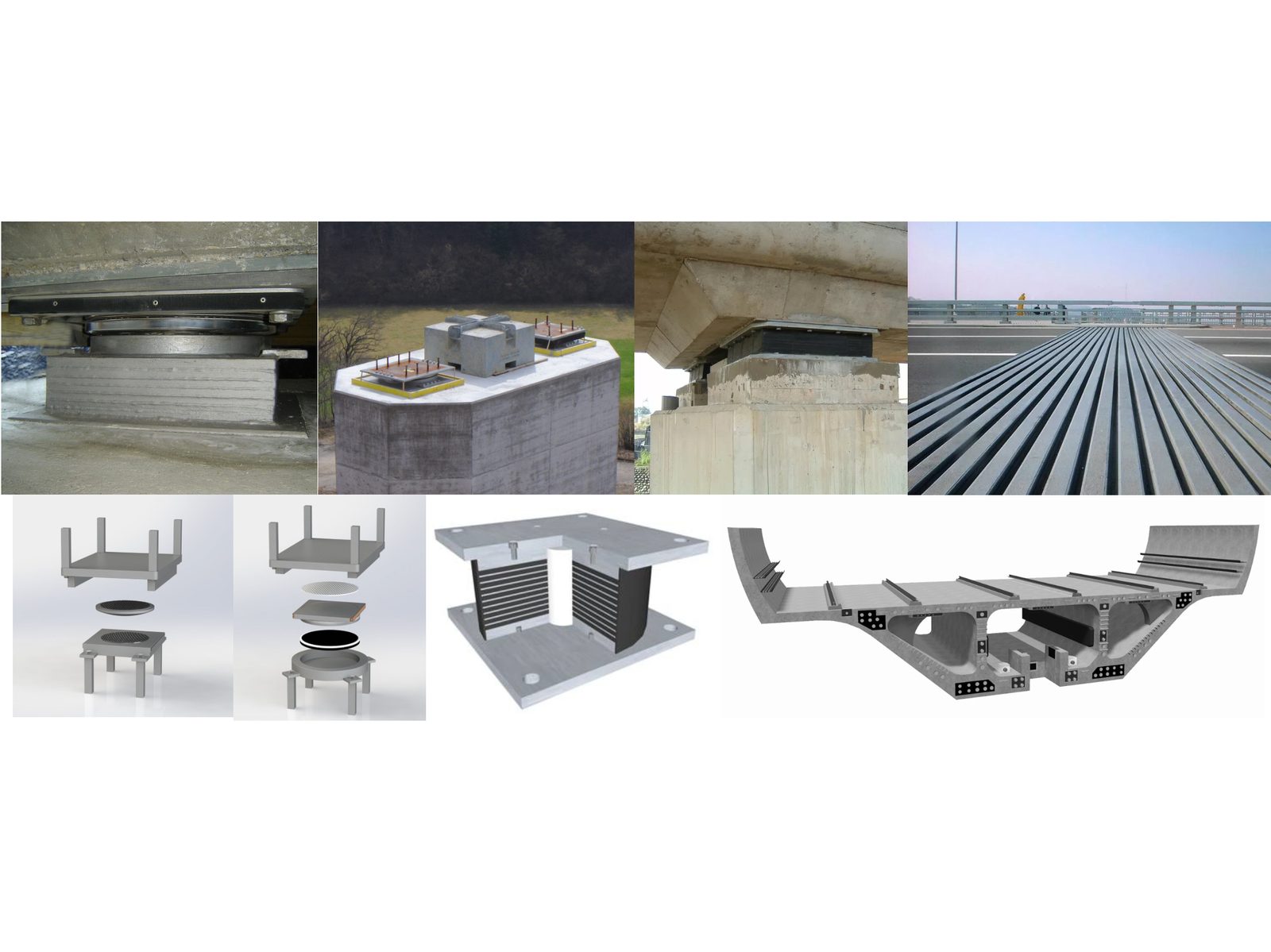
- Bridge bearings & crane rails — epoxy resin grout for bearing pads, dock sills and rail anchoring.
- ISO 9001, ISO 14001 and ISO 45001 certification under national accreditation.
- Technical data sheets, test reports and method statements issued for each product.
- Batch certificates with compressive and flexural strength results at 28 days.
- Pull-off adhesion test records for repair mortars applied to the prepared substrate.
- Per shipment: certificate of conformity, packing list, mixing and placing instructions.
- Grade selection support against the duty — load transfer, chemical resistance or water stoppage.
- Mixing, placement and injection procedures issued with the material.
- Export packing with moisture protection, FOB / CFR / CIF to Gulf ports.
Non-shrink grout is approved or conditionally approved on projects for ADNOC Onshore and HQ, Dubai Municipality, PSD / WA, Etihad Rail, RTA and DAMAC, as documented in project-specific owner, authority or consultant reviews. Separate approvals are required for the epoxy and polyurethane grades; the non-shrink approval does not extend to those products. Supplied to projects across the Gulf, North and Sub-Saharan Africa, South-East Asia and Australia. Middle East supplies are subject to project-specific approval by the owner, engineer or consultant; PROTEKTA prepares and supports the submittal package for that approval.
Non-Shrink, Epoxy & Injection Grouting — Buyer Questions
What is the difference between the four grades?
Non-shrink cementitious grout handles load transfer under baseplates, bearing plates and anchors. Epoxy grout is used where impact, abrasion or chemical resistance governs. PU20 and PU30 are polyurethane resins for fast water stoppage and permanent flexible injection. Grade EP is a low-viscosity epoxy for structural crack bonding. Supplied for projects across the GCC — Saudi Arabia, UAE, Qatar, Kuwait, Oman and Bahrain — and to Iraq, Algeria, Morocco, Nigeria, Ethiopia, Tanzania, Malaysia, Thailand, Singapore, Indonesia, Brunei and Australia, with compliance documentation prepared for consultant, contractor and authority submittal.
What strength can be achieved?
Non-shrink grout is supplied with 28-day compressive strength above 60 MPa at a 0.12 water-to-powder ratio, tested to ASTM C109 or C579. Pour thickness is 10 to 80 mm per lift. Also specified and procured as Non Shrink Grout, Epoxy Grout and PU Injection Resin; full specification ranges, material grades and datasheets are issued for tender, submittal and procurement use.
Which standards and certifications apply?
Non-shrink grout complies with ASTM C1107, C109 / C579 and C580, with supporting reports to ASTM C939 / C939M, C191, C1038 / C1038M, BS 6319-4 and BS EN 12390-8. Standards for the epoxy and polyurethane grades are confirmed against the latest product data sheet. OEM, private-label and bespoke manufacture is supported for contractors, distributors and EPC packages.
Is the ADNOC approval valid for all grades?
No. The approvals cover the non-shrink grout as documented in project-specific reviews. Separate product-specific approvals are required for the epoxy and polyurethane grades, and the non-shrink approval does not extend to them. Export packing, third-party inspection and consolidated shipment to Gulf ports/global ports are arranged with the order.